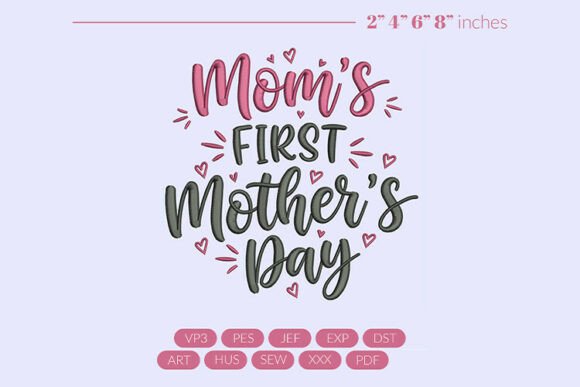
Mom’s First Mother’s Day Embroidery Review
As an embroidery designer preparing for the upcoming spring craft fair season, I am constantly evaluating which digital assets will translate into best-selling physical products. When reviewing the Mom’s First Mother’s Day Embroidery design, my primary focus is on its commercial viability for handmade market booths and Etsy shops. This specific machine embroidery design features elegant script lettering paired with heart accents, targeting the sentimental niche of new mothers. From a production standpoint, this design offers a sophisticated aesthetic that leans toward premium and soft rather than novelty or cartoonish. For creative entrepreneurs and boutique makers, understanding how this embroidery file performs across different substrates is essential for maximizing return on investment during the busy Mother's Day shopping rush.
Evaluating Aesthetic Appeal for Craft Fair Displays
The first impression of the Mom’s First Mother’s Day Embroidery design is one of refined sentimentality. The elegant script suggests a product that belongs in a curated gift shop rather than a generic bargain bin. For a craft fair table display, this visual tone is critical. Customers browsing handmade products are often looking for gifts that feel personal and high-quality. The inclusion of heart accents adds a touch of warmth without overwhelming the typography, making it versatile enough for both modern farmhouse and classic traditional aesthetics. As an Etsy seller or small shop product creator, you want designs that photograph well and communicate value instantly. This design achieves that balance by using clean lines and recognizable motifs that read clearly even in thumbnail images or from a distance at a vendor booth.
Best Product Applications for New Mom Gifts
Determining where to apply this design is just as important as the design itself. Based on the included 2-inch and 4-inch sizes, the Mom’s First Mother’s Day Embroidery is uniquely positioned for specific inventory items:
- Tote Bag Design: The 4-inch size serves as an excellent pocket placement or centered chest logo on canvas tote bags. Market bags are top sellers for new moms who need functional yet stylish carriers for baby essentials.
- Apron Embroidery: Placing this design on the bib or upper chest of a linen apron creates a keepsake item. It transforms a utilitarian kitchen tool into a sentimental handmade product perfect for baking with little ones.
- Tea Towel Embroidery: Kitchen towels are staple craft fair products. The elegant script elevates a simple cotton towel into a giftable item. Ensure the placement allows the text to remain legible when the towel is folded or hanging.
- Embroidered Patch: The 2-inch size is ideal for creating iron-on or sew-on patches. These can be sold as standalone add-ons or applied to denim jackets and caps for a customizable retail experience.
- Fabric Pouches and Wristlets: Small cosmetic bags or zipper pouches benefit greatly from the smaller size option. These serve as perfect "grab-and-go" impulse buys at a price point accessible to most shoppers.
Production Practicality and Batch Manufacturing
For commercial embroidery and batch production, efficiency is key. The Mom’s First Mother’s Day Embroidery appears designed with production speed in mind, provided the digitizing is optimized. Elegant script typically requires fewer color changes than complex pictorial designs, which reduces machine downtime and thread trimming. This makes it highly repeatable for filling orders quickly before a weekend market. However, script lettering demands precision. When evaluating this digital embroidery file, check the stitch pathing to ensure there are no unnecessary jumps that require manual cleanup. A design that runs smoothly without constant operator intervention directly impacts profit margins for handmade business owners.
Photographing finished products for online listings also influences sales. Because this design relies on typography, contrast is everything. A white thread on a cream fabric may look subtle and expensive in person but disappear in a printable mockup or listing photo. Always prioritize high-contrast thread colors for digital marketing assets while offering softer, tonal options for customers who prefer understated elegance in person.
Critical Technical Considerations and Careful Use Notes
While the Mom’s First Mother’s Day Embroidery is versatile, certain technical constraints must be respected to maintain quality. Script fonts are notoriously unforgiving regarding sizing and stabilization.
- Small Lettering Clarity: At the 2-inch size, verify that the loops in the script do not close up. If the letters are too thin or dense, they may cause needle breaks or fabric puckering on textured towels. Test stitching is non-negotiable here.
- Stitch Density on Thick Fabric: Elegant scripts often use satin stitches. On plush fabrics like terry cloth or fleece, the stitches can sink and become unreadable. You may need to adjust the density or use a water-soluble topping to keep the design crisp.
- Curved Surfaces: If applying this to caps, ensure the design has been digitized specifically for curved surfaces. Standard flat embroidery files often distort on hats. If the provided file is flat, limit cap usage to structured fronts with proper hooping techniques.
- Dark Fabric Challenges: Light-colored elegant script on dark fabric requires adequate underlay to prevent the fabric grain from showing through the stitches. Insufficient underlay makes the design look cheap and unprofessional.
Designer Checklist for Commercial Success
Before listing any finished product derived from the Mom’s First Mother’s Day Embroidery design, professional due diligence is required. Never assume a digital file is production-ready without verification. Follow this protocol to protect your brand reputation:
- Test on Scrap Fabric: Always run a sample on the exact material you intend to sell. Canvas totes behave differently than waffle-weave tea towels.
- Verify Hoop Size Compatibility: Confirm the 2-inch and 4-inch versions fit your smallest hoops comfortably. Tight hooping leads to registration errors in multi-color designs.
- Review Stabilizer Pairing: Match the stabilizer weight to the fabric texture. Lightweight knits require cut-away backing, while woven cottons may suffice with tear-away.
- Check Thread Contrast: View the stitched sample in natural lighting and artificial booth lighting. What looks good indoors may wash out under tent lights.
- Confirm Licensing Terms: Crucially, review the license included with the embroidery file. Ensure you have the right to sell finished physical products commercially. Some licenses restrict mass production or require attribution.
- Create Real Mockups: Avoid relying solely on software renderings. Photograph actual stitched samples for your Etsy listings to build trust with buyers who value handmade quality.
The Mom’s First Mother’s Day Embroidery design holds significant potential for craft fair sellers and digital creators alike. Its blend of emotional resonance and elegant styling aligns perfectly with current market trends for personalized gifting. By respecting technical limitations regarding stitch density and fabric choice, and by strategically placing the design on high-value items like tote bags and aprons, you can create a cohesive product line that stands out. Remember that in the handmade market, perceived quality drives sales. Taking the extra time to test, stabilize, and photograph your work ensures that this meaningful milestone design translates into tangible success for your embroidery business.